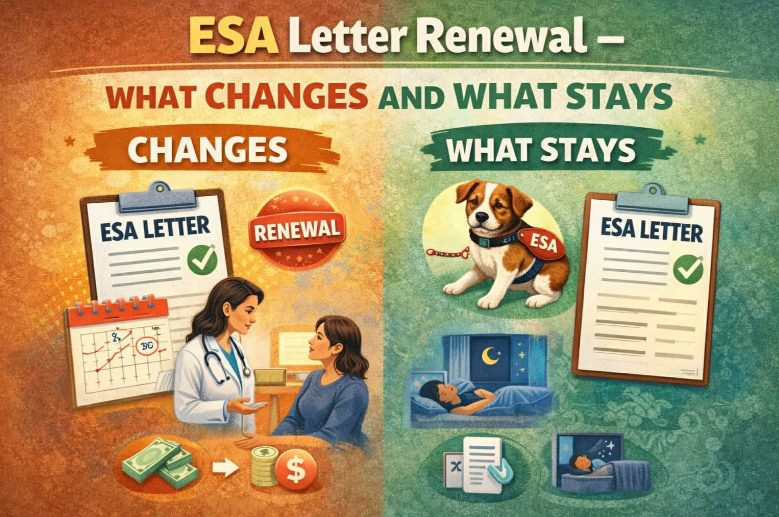
ESA Letter Renewal: What Changes and What Stays
Renewing an Emotional Support Animal (ESA) letter can feel confusing the first time you go through it. Some rules shift depending on housing providers, therapist licensure, and renewal timelines, while other protections remain steady under federal law. Knowing what continues and what requires action is the key to keeping your reasonable accommodation without disruption.
In this guide, we’ll walk you through the ESA letter renewal process step by step, explaining provider verification, renewal rules, common pitfalls, templates, and even how to write an appeal letter—so you can stay compliant and confident.
Quick Answer
An ESA letter renewal typically requires:
A new assessment by a licensed mental health professional (LMHP).
Updated verification of your mental health condition.
Confirmation of therapist licensure in your state.
Annual or case-based renewal rules, depending on landlord or provider.
What stays the same? Your right to reasonable accommodation under the Fair Housing Act (FHA). Landlords still cannot charge pet fees or deny housing because of your ESA when you have a valid letter.
Deep Dive on Rules
Renewals are not about rewriting your entire history. Instead, they’re about confirming two important things:
Your condition still qualifies.
ESA verification must show that your emotional or mental health needs continue to require the support of an animal.
Your provider is properly licensed.
Landlords often check a therapist’s licensure to confirm your letter is valid. If your provider moves, changes states, or lets their license lapse, your letter may no longer hold weight.
Renewal Rules in Practice
Annual Check-Ins: Many providers recommend renewing your ESA letter once every 12 months.
Case-Specific Requests: Some landlords ask for a “recent” letter, especially during lease renewals.
Ongoing Verification: If your ESA letter is challenged, you may need to provide updated proof.
Think of it like a driver’s license—it confirms you’re still qualified, and it’s linked to an authority (your LMHP).
If you’re moving states, check whether your therapist’s license covers your new location. Renewal may require finding a provider licensed in your new state.
Common Pitfalls
Many people lose their ESA housing protections during renewal because of avoidable mistakes. Here are the biggest pitfalls:
1. Expired or Old Letters
Some tenants assume one letter lasts forever. While your condition may be ongoing, housing providers want current documentation. If your letter is more than a year old, expect challenges.
2. Non-Licensed Providers
Not all online ESA sites use licensed professionals. If your landlord verifies therapist licensure and it doesn’t check out, your letter may be denied.
3. Wrong Templates
Some renewal letters are formatted poorly, missing key details like therapist credentials or state license numbers. Landlords can reject incomplete templates.
4. No Appeal Plan
If your renewal request is denied, not knowing how to appeal means you lose your rights unnecessarily.
Examples / Templates
When it comes to ESA letter renewal, the structure of the document is just as important as the content itself. A well-prepared template helps ensure your letter looks professional, covers all the required details, and passes landlord verification without problems. Using a strong format also reduces the risk of delays or denials.
A reliable renewal template should always include:
Your name and address.
Therapist’s name, license number, and state.
Statement of evaluation confirming your qualifying condition.
Clear mention of reasonable accommodation.
Date of issue and validity timeframe.
See also: Enhancing Automotive Business Performance Through Strategic Practices
Renewal ESA Letter Template (Example)
To Whom It May Concern,
I am a licensed mental health professional, practicing in the state of [STATE], with license number [LICENSE #].
I have been treating [FULL NAME], who continues to experience symptoms that substantially limit one or more major life activities. In my professional judgment, the presence of an Emotional Support Animal is necessary for their well-being.
Please consider this letter as ongoing verification of [FULL NAME]’s need for reasonable accommodation under the Fair Housing Act.
Sincerely,
[THERAPIST NAME, TITLE, LICENSE #, DATE]
How Landlords Verify
When you submit a renewal letter, most landlords follow a step-by-step verification process. Their goal is to confirm that your ESA letter is genuine, current, and tied to a licensed provider. At the same time, they must also respect your ESA housing rights under the Fair Housing Act, which protects tenants with valid ESA documentation.
Typically, landlords will:
Check therapist licensure. They may search state licensing boards to ensure the provider is legitimate.
Confirm letter formatting. Missing details—like license number or issue date—can raise red flags.
Contact the provider if needed. Some landlords verify directly by phone or email.
Validate timing. If the letter looks outdated, they can request a renewal, but they cannot deny you solely for having an ESA.
Remember: while landlords can verify your ESA documentation, they cannot charge extra fees, limit access, or reject your application just because you have an ESA. That’s where your housing rights remain non-negotiable.
When to Renew
Timing your ESA letter renewal is as important as having the letter itself. Renew too late, and you risk losing your housing protections. Renew too early, and you might end up spending money unnecessarily.
General Rule of Thumb
Most providers and housing experts recommend renewing every 12 months. This aligns with how landlords typically evaluate documents during lease agreements or annual recertification.
Situations Where Renewal Is Needed Sooner
Moving into a new rental property. Landlords often request an updated ESA verification letter before accepting your lease.
Switching states. If your therapist’s license does not cover your new state, renewal through a local provider is mandatory.
Provider changes. If your therapist retires, relocates, or changes licensure status, you’ll need a renewal with an active provider.
Challenged letter. If your landlord questions the validity of your current letter, updating it with a new one resolves disputes faster.
Renewal Grace Periods
Some housing providers may allow a 30–60-day grace period if your letter expires mid-lease. But this is not guaranteed. Having your renewal ready in advance is always safer.
Mark your ESA renewal date on your calendar, similar to how you’d track driver’s license or passport expiration.
Appeal Letter Anatomy
Even with proper renewal, some landlords deny ESA requests. This doesn’t mean you’re out of options. Writing an appeal letter can restore your rights.
Why Appeals Matter
The Fair Housing Act gives you the right to reasonable accommodation, but enforcement often requires persistence. A clear, professional appeal letter can make your case stronger.
Structure of an Appeal Letter
State your name and address.
Mention that your ESA renewal letter was denied.
Legal Basis
Reference your protection under the Fair Housing Act (FHA).
Use wording like “denial of this request may be a violation of federal housing law.”
Opening Statement
Supporting Documentation
Attach your renewed ESA letter.
Add therapist licensure details if not included in the original.
Reasonable Accommodation Language
Stress that the request is not for a pet privilege but for a reasonable accommodation due to a disability.
Closing Statement
Request reconsideration within a specific timeframe.
Keep tone respectful but assertive.
Sample Appeal Letter Excerpt
To Whom It May Concern,
I am writing to appeal the denial of my Emotional Support Animal accommodation request. Attached is my renewed ESA letter, signed by a licensed mental health professional. Under the Fair Housing Act, I am entitled to reasonable accommodation for my disability.
I respectfully request reconsideration of this decision. Please respond within 10 business days.
Sincerely,
[Your Name]
Wrapping It Up
ESA letter renewal doesn’t have to be stressful. Here’s the bottom line:
What Changes? Renewal dates, therapist verification, and updated documentation.
What Stays? Your right to reasonable accommodation under the Fair Housing Act.
What Matters Most? Working with licensed providers and using proper templates.
Keeping track of renewal rules avoids pitfalls, saves you from landlord disputes, and ensures your Emotional Support Animal remains a protected part of your home life.
Still unsure which option fits your needs? Compare costs, compliance, and support before choosing a provider that truly protects your rights. Start today with ESA packages for secure, compliant renewal letters backed by licensed professionals.
FAQs
1. How often do I need to renew my ESA letter?
Most providers recommend renewing every 12 months. Landlords often request a “recent” letter when signing a new lease.
2. Can my landlord reject my renewal letter?
Yes, if the letter is missing details, comes from a non-licensed provider, or appears outdated. That’s why using correct templates and licensed professionals matters.
3. Do I need to see the same therapist for renewal?
Not necessarily. You can renew with a new therapist, as long as they are a licensed mental health professional (LMHP) in your state.
4. What happens if my renewal is delayed?
You may face temporary denial of accommodation until you provide an updated letter. Some landlords offer a short grace period, but it’s better to renew early.
5. Can ESA letters be verified online?
Yes. Many landlords check therapist licensure through state licensing boards or contact the provider directly. Online ESA letters are valid if they come from licensed professionals.
6. Are templates safe to use?
Templates are fine as long as they include essential details: provider credentials, state license number, your name, and a reference to reasonable accommodation. Avoid generic letters that look copy-pasted.
7. What if my appeal fails?
If your landlord ignores or rejects your appeal, you can file a complaint with HUD or a local housing authority.